
 The Declaration drafting committee formally submitted its final report 250 years ago yesterday, on Friday, June 28, 1776. Just why that date was chosen is not clear. As I’ve noted, the committee kept no minutes, and there are only scraps of contemporary evidence as to its workings. And so, we have no idea of whether a specific deadline was set.
Two reasons are probable. First, just the week before Congress had reminded itself that meeting on Saturdays were to be rare, “unless on any particular occasion, the Congress shall order otherwise,” so that delegates could catch up on work. So, if there was a deadline – then it needed to be on the Friday before debate on the Lee resolution for independence resumed on Monday. Likewise, the Declaration draft needed to have been submitted (and read and tabled) before that debate resumed.
But that also means that Congress members would have already heard the Declaration draft in full and would have had opportunity to inspect it more carefully at the table. (Thomson is very unlikely to have allowed the submitted draft to leave his guard or to have it allowed it to be copied.) And so, once the debate resumed, we can speculate that the submitted Declaration text might have had some influence on the debate itself. But the debate on July 1-2 would not focus on the Declaration text.
Meanwhile, it was clear that, as expected, seismic shifts had taken place in the middle colonies, and that New Jersey and Pennsylvania were both on board with the idea of independence. And, although it wouldn’t be reported to Congress until Monday, July 1, the Maryland Convention on Friday, June 28, reissued its instructions to its congressional delegates to vote positively “in declaring the United Colonies free and independent states.”
And so, Congress delegates had an unstructured Saturday and a Sabbath day before turning, as so many of them put it, to “the great question” of separation and independence. As there are no journal records, and very little Congress-related correspondence, we can only speculate as to how the delegates spent their time and energy that weekend.
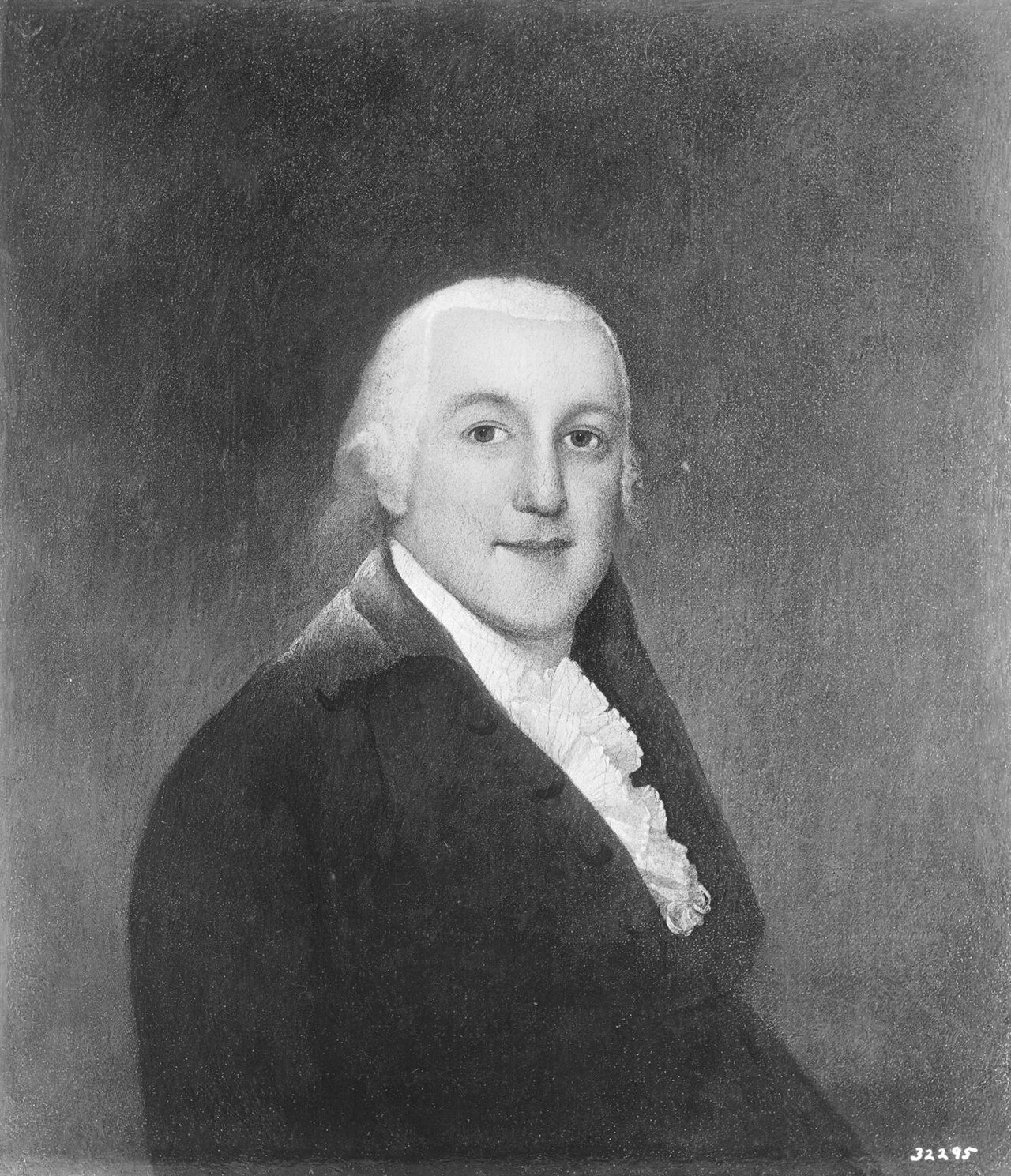
Edward Rutledge, in a 1791 portrait painted by James Earl. Public domain photo.
But there IS one delegate letter worth our some time and attention, if only to remind us that even at this stage not everyone in Congress was happily moving toward independence. On this date, South Carolina’s Edward Rutledge wrote a revealing, griping letter to John Jay in New York, pleading with him to get to Congress by Monday to join in the New York delegation during the independence debates. Just how Rutledge thought his letter would arrive in New York in time for Jay to read it, be convinced, and then actually get to Philadelphia in time for the debate beggars the imagination – not impossible by any means, but a considerable bit of a stretch. Perhaps Rutledge wasn’t all that serious and just wanted to complain to someone in agreement.
Rutledge, we should recall, seems to have been the person who proposed tabling the Lee resolution for independence on June 10 for three weeks until July 1. He must have known, whatever his leaning, that the middle colonies had been moving in support and that the resolution was at least likely to get a majority vote – and pass.
Rutledge reminded Jay of the general inactivity of the New York delegation. Someone of Jay’s insights and abilities could affect matters. It happened that Rutledge himself had been appointed to the Articles of Confederation committee, chaired by John Dickinson, and thought it had “the Vice of all his Productions,” i.e. “Refining too much.” What especially bothered Rutledge was the prospect was the “Idea of destroying all Provincial Distinctions” for “the good of the whole,” which would really have the effect of giving dominance “to the Government of the Eastern Provinces” – and he went on:
I confess I dread their over-ruling Influence in Council, I dread their low Cunning, and those levelling Principles which Men without Character and without Fortune in general Possess, which are so captivating to the lower Class of Mankind, and which will occasion such a fluctuation of Property as to introduce the greatest disorder – I am resolved to vest the Congress with no more Power than what is absolutely necessary, and to use a familiar expression keep the Staff in in our own Hands.
So much for government and what Rutledge envisioned. As for independence, he requested Jay’s presence to oppose it – at least as a collective matter. Like other colonies, South Carolina had already made its own separation by creating its own constitution on March 26 – but it had done that entirely on its own terms. As much as anything, Rutledge’s wariness reflects the suspicions delegates and delegations had about each other. In reality, the colonists had only recently begun interacting with each other, and only under duress. For some at least, they had hardly built up wells of trust yet. For Rutledge and other Southerners, anything that hinted of infringement on their own way of government was to be resisted.
And yet, when push came to shove, Rutledge signed the Declaration of Independence. But not before creating yet another wave before that signing could happen at all – and in doing so eventually land himself a showstopping number in the Tony-award winning Broadway musical, 1776.
Countdown to Semiquincentennial: Number 23, June 29, 1776
By Michael G. Ditmore
0 Comments