
Mary McLeod Bethune was born in 1875 near Mayesville, South Carolina, the fifteenth of seventeen children. She moved to Daytona Beach, Florida, in 1904 with $1.50 in her pocket and founded a school for Black girls, with five students, using discarded crates for desks and charcoal for pencils.
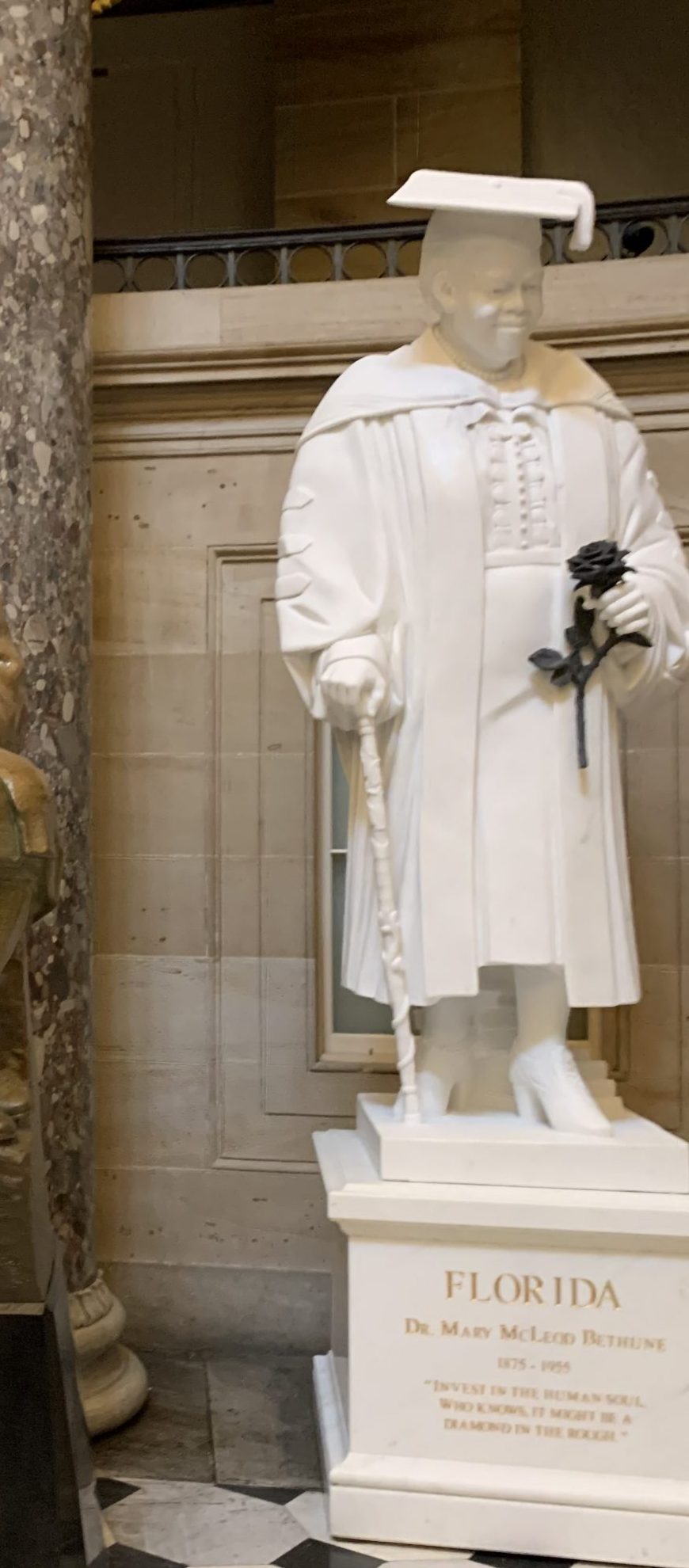
A likeness of Bethune was placed by Florida into the National Statuary Hall Collection in the U.S. Capitol.
Bethune wrote later, “I had faith in a loving God, faith in myself, and a desire to serve.” In two years, more than 250 girls were enrolled in her school, and by 1923, the school merged with Cookman Institute to become Bethune-Cookman College, one of the few places in the South offering higher education to Black students.
Bethune also served as an advisor to President Franklin D. Roosevelt and became close friends with Eleanor Roosevelt while leading multiple organizations dedicated to improving education, civil rights, labor rights, and voting rights for Blacks and women.
In 2018 Florida placed a likeness of Bethune in the National Statuary Hall Collection in the U.S. Capitol, making her the first Black American represented there. In 2023, I was touring the Capitol with some Pepperdine students who were excited to see Bethune’s statue, which surprised me. I had heard Bethune’s name but didn’t really know much about her. Thanks to their reaction, I determined to learn more about this remarkable woman. And I’m glad I did!
0 Comments