
Alex Haley began his career as an author by ghost-writing love letters for his less eloquent shipmates while serving in the Coast Guard during World War II. After the war, Haley convinced the Coast Guard to let him work as a journalist, which he did until he retired in 1959, earning multiple promotions and awards along the way. Haley continued working as a journalist, including as a senior editor for Reader’s Digest, and interviewing many famous people, including Martin Luther King Jr., for Playboy magazine in the 1960s.
Haley’s first book, The Autobiography of Malcolm X, was published in 1965, and has been a consistent best-seller since. In 1976, Haley published Roots: The Saga of an American Family, a novel based on Haley’s research into his family history. The book opens with the story of Kunta Kinte, who was kidnapped from Gambia in 1767 and shipped to Maryland to be sold as a slave. Haley believed he was a seventh-generation descendant of Kunta Kinte.
 ABC adapted “Roots” into an eight-night television miniseries that mesmerized a nation. In 1977, there were no DVRs or streaming services or dedicated replays – you watched a show when it aired or you missed it. And no one wanted to miss “Roots.” I was a sophomore in high school, and the last thing I wanted to do every evening was watch TV with my family. But I watched “Roots.” We all did. It felt like a cultural shifting point, somehow, that the whole country gathered around the TV to watch a generational saga about a Black family.
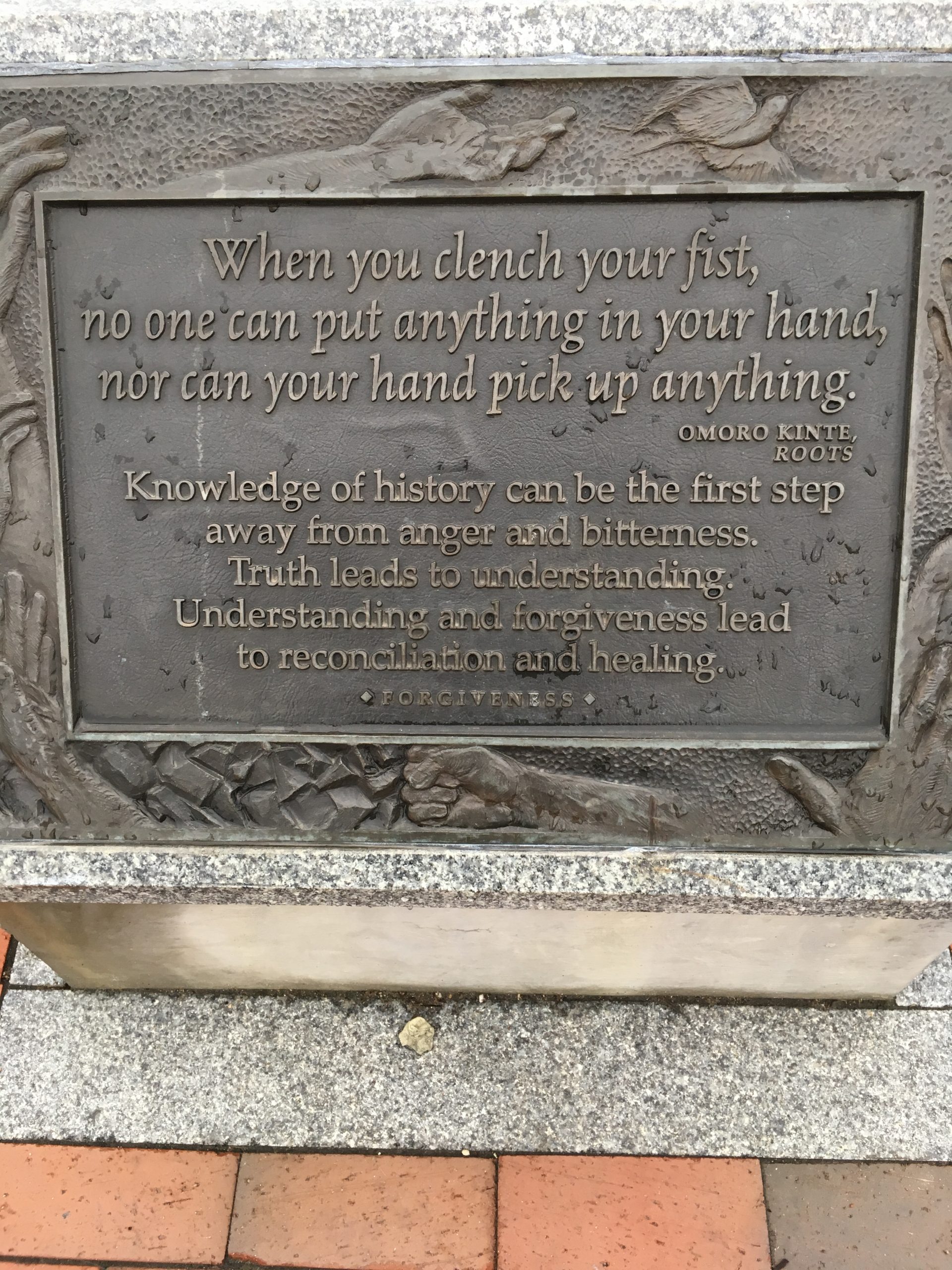
In 2002, a memorial was dedicated in the city dock section of Annapolis, Maryland, to mark the arrival of Kunta Kinte. Nearby is a memorial depicting Haley reading a story to young children gathered at his feet, which delighted me when we stumbled across it a few years ago. Just a simple scene, but it’s a powerful reminder that stories can change the world.
0 Comments